Click on image to enlarge
Blood Screening System: Syva Corporation
Before blood can be transfused into a patient, it must be screened for blood type and checked for the presence of antibodies. In the late 1980’s this process was still performed manually by lab technicians in a hospital’s blood lab.
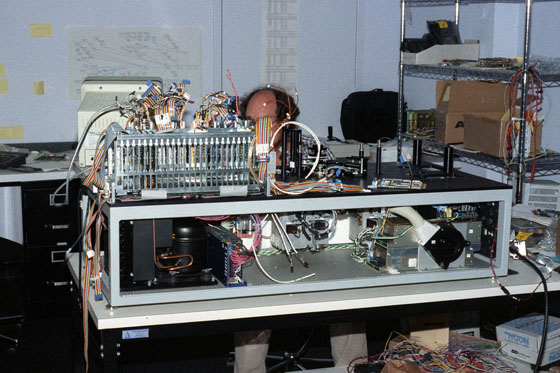
Syva Corporation, a division of Syntex (subsequently acquired by Roche), developed a novel approach for automating blood screening. The patented chemistry was proven in the lab on a breadboard instrument constructed by Syva. This early breadboard had been originally designed solely to perform blood typing. However, subsequent marketing input made it clear that to be a viable product, the instrument would have to perform the much more complex antibody screen test as well. Although the breadboard was able to prove basic feasibility, it was not capable of running antibody screening at anywhere near an acceptable pace.
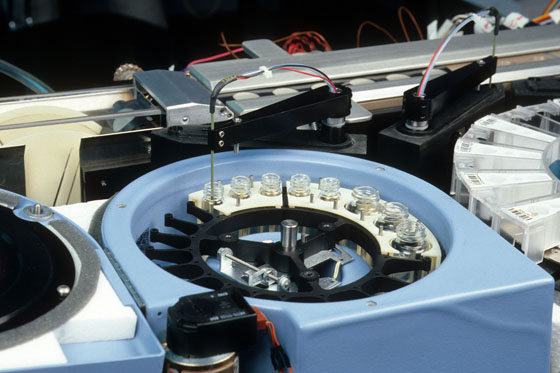
Syva approached David Kelley Design (DKD) to redesign the instrument from the ground up, so that it could run both tests at the target 15-20 tests/hr. Walt Conti was put in charge of the project, which at the time was to be DKD’s most complex to date. The instrument would have to reliably perform a myriad of sophisticated processes, including: the separation of red blood cells from plasma, the addition of precise amounts of numerous refrigerated reagents, thorough mixing without rupturing blood cells, and finally, delivering the sample to a fiber optic laser detector. In addition, the entire process needed to take place under tight temperature control.
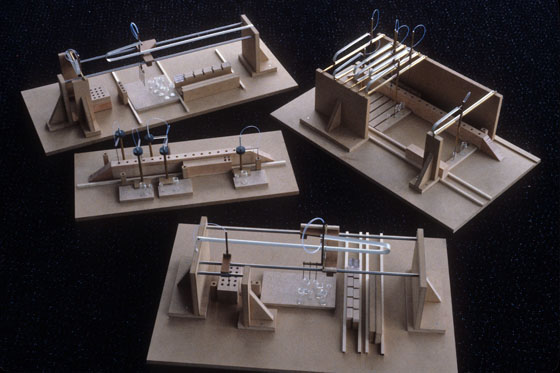
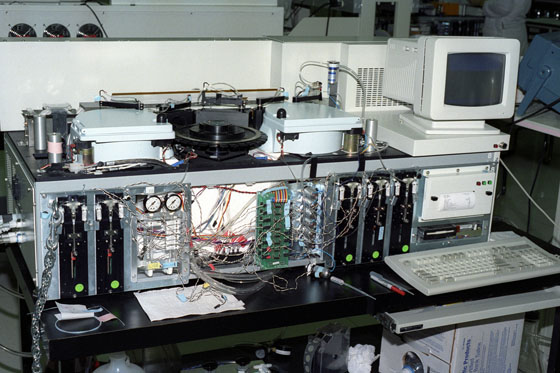
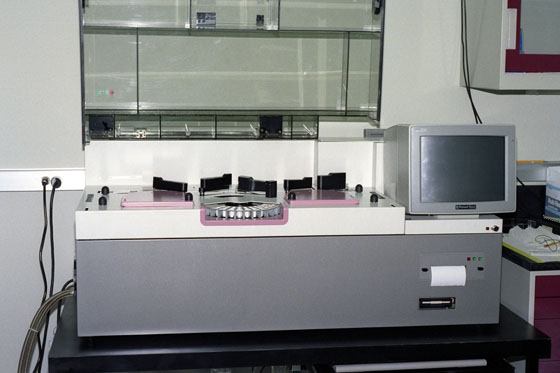
After interviewing the chemists to understand the assay requirements in detail, five potential instrument configurations were proposed, each with varying degrees of complexity and throughput. From these, a final approach was selected. The new architecture replaced the single XYZ linear probe of the breadboard with a parallel 5-probe layout, which would allow much higher throughput.
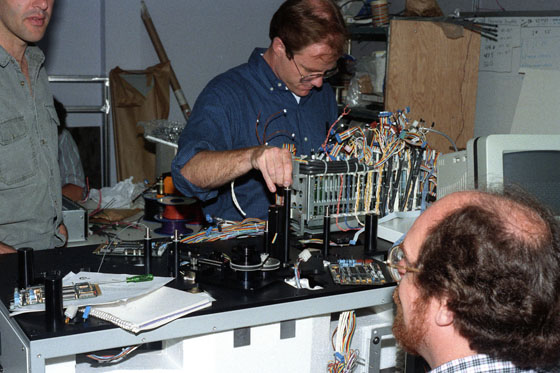
With a preferred architecture established, Walt led a team of DKD and Syva engineers in the detailed design of the new instrument. In addition to incorporating the new architecture, the design automated several peripheral functions (magnetic separation, reagent resuspension, evaporation control, etc.), which up to that point had been performed apart from the breadboard.
Despite the inherent complexity of the instrument, Syva insisted
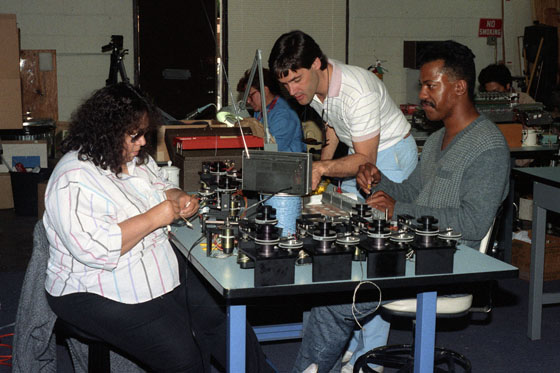
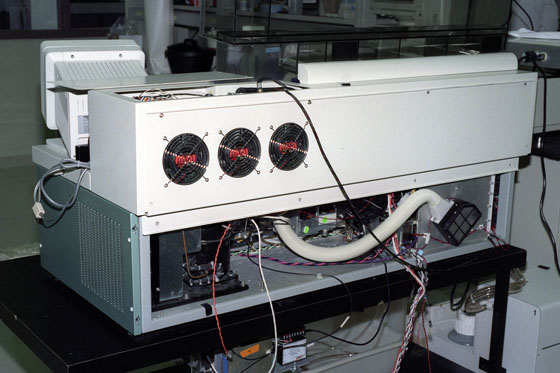
that it be as reliable as possible and that it be field serviceable. From a design standpoint this was addressed by making the instrument as modular as possible. The five mechanical probes were identical, as were the reagent carousels and the syringe units. During assembly, each module could be tested and calibrated as a separate unit and then just
“dropped” into the appropriate location in the machine. If a module failed in the field it could be swapped out quickly with a replacement unit and the faulty unit brought back to the factory for diagnosis.
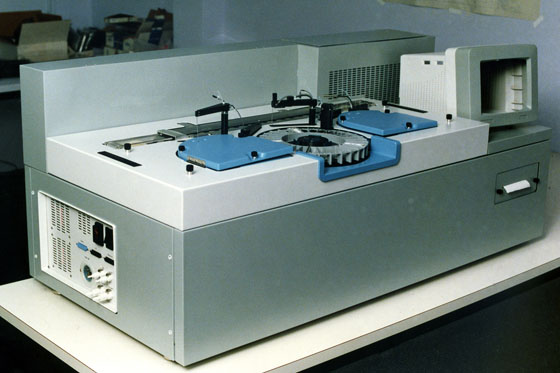
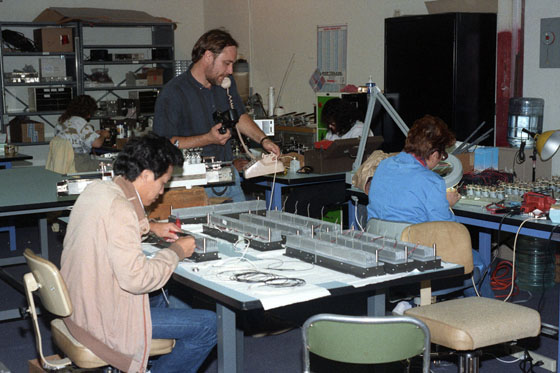
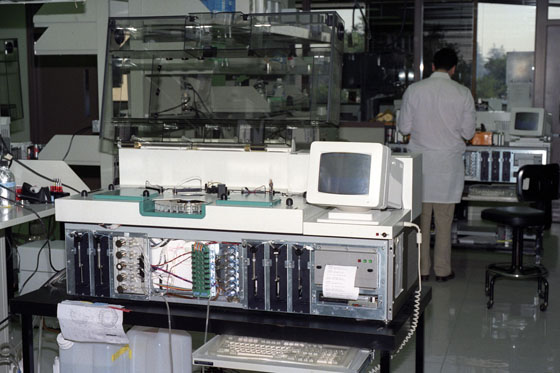
Walt and the team built two initial prototype units to prove out the design. After validating the design with these two units, the DKD and Syva team manufactured an additional run of 10 units. These units were submitted to the FDA for clinical trials.
These pre-production units became the first in the industry to fully automate blood typing and antibody screening. The instrument achieved its target throughput of 20 tests/hr., which was an order of magnitude better than the 2-3 tests/hr. of the breadboard.